Table of Contents Abstract Meltblown filters are manufactured from synthetic fiber materials using the Melt Blowing process and have garnered attention due to their high particle adsorption capacity and extensive applications, particularly in the filtration industry. These filters, owing to their unique structure and ability to remove fine particles at the micro and nano scales, […]
Table of Contents Introduction Sintered filters are produced through a sintering process, where materials such as metal powders, ceramic, or polymer fibers are subjected to heat and pressure, bonding them into a solid, homogeneous structure. These materials are typically formed into tubular shapes via molding or isostatic pressing, often eliminating the need for cores. This […]
Table of Contents Introduction Coalescer filters are used to protect industrial equipment and processes from damage caused by liquid pollutants. These contaminants can cause corrosion, clog pipes and equipment, and reduce process performance. Coalescers are an important part of industrial filtration systems. which have various uses in industries such as oil and gas, petrochemicals, power […]
Introduction of magnetic force To understand how magnetic filters work, it’s helpful to have a basic understanding of magnetic forces. This will give you insight into the nature of magnetic forces and their usefulness. Magnetic forces occur between two magnetic objects and can be either attractive or repulsive, depending on the alignment of their magnetic […]
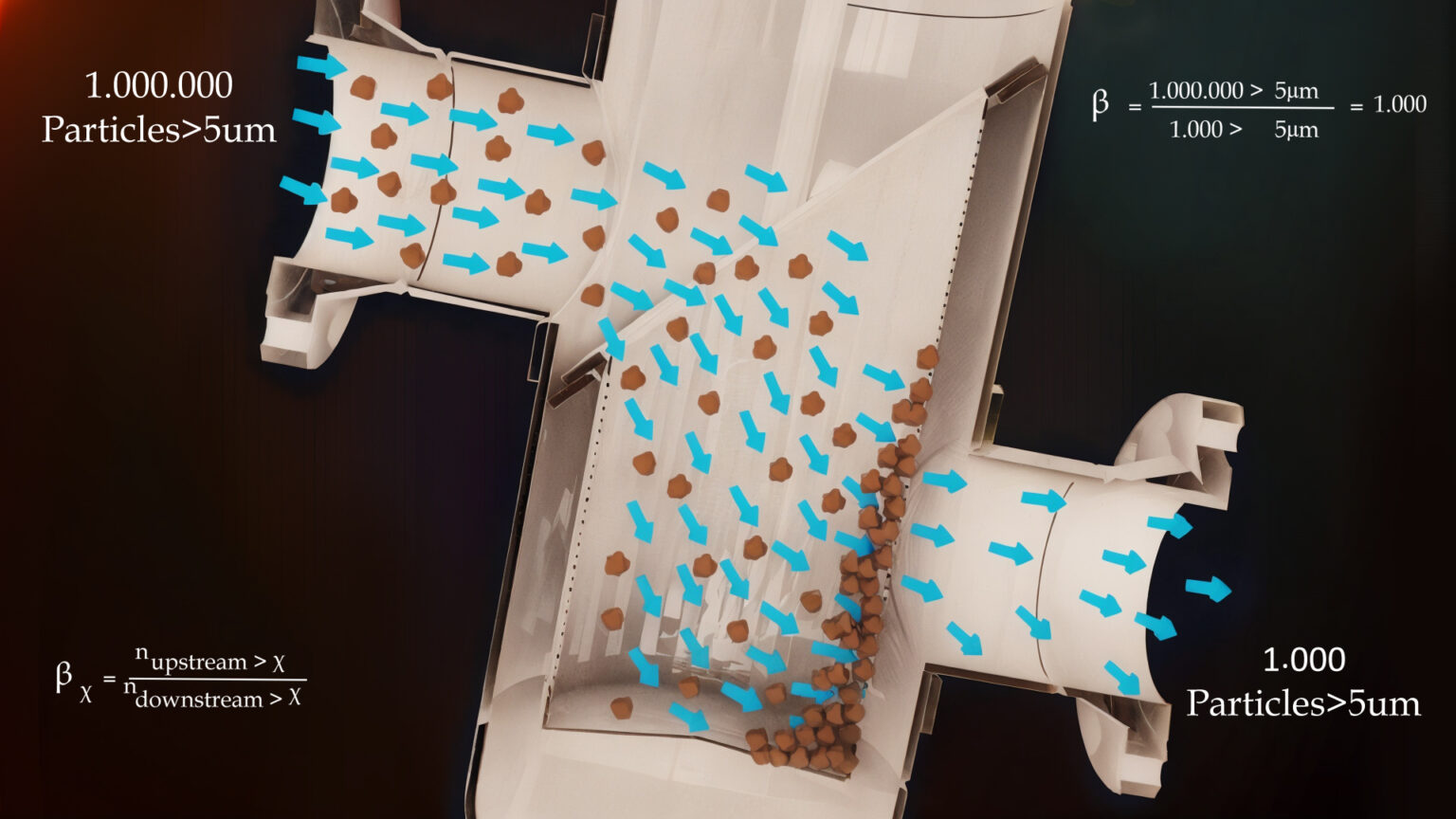
It is important to understand that, only considering the micron size of particles for a filter is insufficient. The micron size is not very important without measuring the efficiency of the filter media in a given particle size. It can be said that a regular roll of paper may also stop 10-micron particles, but with […]
Nanotechnologists have discovered new filtering media for effective filtrations. The nanofiber-based filtering media, made up of fibers of diameter ranging from 100 to 1000 nm, can be conveniently produced by electrospinning technique. This article addresses the current state of the art in filters by using nanofibrous filtering media. These filtering media are being surface-modified to […]
Filtration is a crucial separation process utilized in various industries to remove unwanted materials from fluid streams. There are several ways to perform filters, based on different mechanisms. In Mechanical filtration, unwanted materials are removed from the fluid stream based on their size or shape. In chemical filtration, impurities are separated from the fluid stream […]
Filtration is a crucial process in many industries that helps to remove unwanted materials from a fluid stream. A filter element is an essential component of filtration systems that comprises three main parts: media, support, and filter body. The media is the primary component of a filter element and typically consists of a porous surface. […]
Introduction of magnetic force To understand how magnetic filters work, it’s helpful to have a basic understanding of magnetic forces. This will give you insight into the nature of magnetic forces and their usefulness. Magnetic forces occur between two magnetic objects and can be either attractive or repulsive, depending on the alignment of their magnetic […]
The quality of the air inlet of the turbine is a critical factor influencing the performance and life of the gas turbine. Consequently, it is essential to implement a filtration system to manage air quality by eliminating pollutants present at the turbine inlet. Given the numerous factors involved, selecting an appropriate filtration system can be […]
EN | FA Submit your paper Conference Registration About the Conference The energy industries of Iran constitute one of the most important sectors of the national economy, playing a vital role in the supply chain and production of strategic products. Within this complex and dynamic industry, the efficiency and quality of filtration and separation processes […]
Abstract Microfiltration (MF) is one of the oldest and most widely applied pressure-driven membrane processes, based on the physical separation of particles, microorganisms, and colloids in the size range of 0.1–10 μm. Due to its relatively low operating pressure, ease of operation, and high separation efficiency, MF has found extensive applications in water treatment, food […]
Absrtact Membrane filtration technology introduces a novel separation approach that cannot be achieved using conventional filter media. Membranes—classified into microfiltration, ultrafiltration, nanofiltration, and reverse osmosis—play a critical role in various industrial applications, including petrochemical processes, water treatment, pharmaceuticals, and food processing. These membranes, manufactured from cellulosic, polymeric, or ceramic materials, enable separation at molecular and […]
Log In×
(+93) Afghanistan
(+355) Albania
(+213) Algeria
(+1) American Samoa
(+376) Andorra
(+244) Angola
(+1) Anguilla
(+1) Antigua
(+54) Argentina
(+374) Armenia
(+297) Aruba
(+61) Australia
(+43) Austria
(+994) Azerbaijan
(+973) Bahrain
(+880) Bangladesh
(+1) Barbados
(+375) Belarus
(+32) Belgium
(+501) Belize
(+229) Benin
(+1) Bermuda
(+975) Bhutan
(+591) Bolivia
(+599) Bonaire, Sint Eustatius and Saba
(+387) Bosnia and Herzegovina
(+267) Botswana
(+55) Brazil
(+246) British Indian Ocean Territory
(+1) British Virgin Islands
(+673) Brunei
(+359) Bulgaria
(+226) Burkina Faso
(+257) Burundi
(+855) Cambodia
(+237) Cameroon
(+1) Canada
(+238) Cape Verde
(+1) Cayman Islands
(+236) Central African Republic
(+235) Chad
(+56) Chile
(+86) China
(+57) Colombia
(+269) Comoros
(+682) Cook Islands
(+225) Côte d'Ivoire
(+506) Costa Rica
(+385) Croatia
(+53) Cuba
(+599) Curaçao
(+357) Cyprus
(+420) Czech Republic
(+243) Democratic Republic of the Congo
(+45) Denmark
(+253) Djibouti
(+1) Dominica
(+1) Dominican Republic
(+593) Ecuador
(+20) Egypt
(+503) El Salvador
(+240) Equatorial Guinea
(+291) Eritrea
(+372) Estonia
(+251) Ethiopia
(+500) Falkland Islands
(+298) Faroe Islands
(+691) Federated States of Micronesia
(+679) Fiji
(+358) Finland
(+33) France
(+594) French Guiana
(+689) French Polynesia
(+241) Gabon
(+995) Georgia
(+49) Germany
(+233) Ghana
(+350) Gibraltar
(+30) Greece
(+299) Greenland
(+1) Grenada
(+590) Guadeloupe
(+1) Guam
(+502) Guatemala
(+44) Guernsey
(+224) Guinea
(+245) Guinea-Bissau
(+592) Guyana
(+509) Haiti
(+504) Honduras
(+852) Hong Kong
(+36) Hungary
(+354) Iceland
(+91) India
(+62) Indonesia
(+98) Iran
(+964) Iraq
(+353) Ireland
(+44) Isle Of Man
(+972) Israel
(+39) Italy
(+1) Jamaica
(+81) Japan
(+44) Jersey
(+962) Jordan
(+7) Kazakhstan
(+254) Kenya
(+686) Kiribati
(+965) Kuwait
(+996) Kyrgyzstan
(+856) Laos
(+371) Latvia
(+961) Lebanon
(+266) Lesotho
(+231) Liberia
(+218) Libya
(+423) Liechtenstein
(+370) Lithuania
(+352) Luxembourg
(+853) Macau
(+389) Macedonia
(+261) Madagascar
(+265) Malawi
(+60) Malaysia
(+960) Maldives
(+223) Mali
(+356) Malta
(+692) Marshall Islands
(+596) Martinique
(+222) Mauritania
(+230) Mauritius
(+262) Mayotte
(+52) Mexico
(+373) Moldova
(+377) Monaco
(+976) Mongolia
(+382) Montenegro
(+1) Montserrat
(+212) Morocco
(+258) Mozambique
(+95) Myanmar
(+264) Namibia
(+674) Nauru
(+977) Nepal
(+31) Netherlands
(+687) New Caledonia
(+64) New Zealand
(+505) Nicaragua
(+227) Niger
(+234) Nigeria
(+683) Niue
(+672) Norfolk Island
(+850) North Korea
(+1) Northern Mariana Islands
(+47) Norway
(+968) Oman
(+92) Pakistan
(+680) Palau
(+970) Palestine
(+507) Panama
(+675) Papua New Guinea
(+595) Paraguay
(+51) Peru
(+63) Philippines
(+48) Poland
(+351) Portugal
(+1) Puerto Rico
(+974) Qatar
(+242) Republic of the Congo
(+40) Romania
(+262) Runion
(+7) Russia
(+250) Rwanda
(+290) Saint Helena
(+1) Saint Kitts and Nevis
(+508) Saint Pierre and Miquelon
(+1) Saint Vincent and the Grenadines
(+685) Samoa
(+378) San Marino
(+239) Sao Tome and Principe
(+966) Saudi Arabia
(+221) Senegal
(+381) Serbia
(+248) Seychelles
(+232) Sierra Leone
(+65) Singapore
(+1) Sint Maarten
(+421) Slovakia
(+386) Slovenia
(+677) Solomon Islands
(+252) Somalia
(+27) South Africa
(+82) South Korea
(+211) South Sudan
(+34) Spain
(+94) Sri Lanka
(+1) St. Lucia
(+249) Sudan
(+597) Suriname
(+268) Swaziland
(+46) Sweden
(+41) Switzerland
(+963) Syria
(+886) Taiwan
(+992) Tajikistan
(+255) Tanzania
(+66) Thailand
(+1) The Bahamas
(+220) The Gambia
(+670) Timor-Leste
(+228) Togo
(+690) Tokelau
(+676) Tonga
(+1) Trinidad and Tobago
(+216) Tunisia
(+90) Turkey
(+993) Turkmenistan
(+1) Turks and Caicos Islands
(+688) Tuvalu
(+1) U.S. Virgin Islands
(+256) Uganda
(+380) Ukraine
(+971) United Arab Emirates
(+44) United Kingdom
(+1) United States
(+598) Uruguay
(+998) Uzbekistan
(+678) Vanuatu
(+58) Venezuela
(+84) Vietnam
(+681) Wallis and Futuna
(+212) Western Sahara
(+967) Yemen
(+260) Zambia
(+263) Zimbabwe
Previous slide
Next slide
Thorsten Stoffel
Education
Master in pollical sciences, business administration and American English
Expriences:
Responsible for quality control at Siemens AG (2002-2000)
Manager of various products at BenQ Mobile GmbH & Co OHG (2005-2006)
product manager for various areas of consumer electronics at Siemens and TDK (2003-2008)
Senior Global Product Manager for air filtration products at DELBAG GmbH (2008-2018)
Responsible for the global air filtration product line of DELBAG GmbH (2018 until now)
Responsible for the product direction, product development and marketing of the air filter elements marketed by DELBAG
Central interface between sales, production and sales, production and R&D
Member of the DELBAG negotiating team during the transition to Hengst SE in 2018 and represents the corporate interests of DELBAG before international expert committees and industry associations, such as the VDMA (German Association of Mechanical Engineers) or Eurovent
Projects:
English teacher (1997-2000)
Conducting numerous open webinars and holding countless lectures before distinguished audiences on air filtration trends and physics over the last 13 years in the sector
Publication of the podcast etitled bio functionalizing activated carbon in collaboration with OFI
The launch of food-safe filters for HVAC applications
A low-pressure-loss HEPA filter line
Teaching:
Basics of Filtration (preliminary - advanced)
Principles of Filtration Based on Standards
Teaching Related Standards (EN-779, ISO16890,ISO 16889, ISO 2941, ISO 2942, ISO 2943,ISO 9237, ISO 5011, ISO 11057, ASTM F316