

It is important to understand that, only considering the micron size of particles for a filter is insufficient. The micron size is not very important without measuring the efficiency of the filter media in a given particle size. It can be said that a regular roll of paper may also stop 10-micron particles, but with what efficiency can it do this? Or how many percent of its 10-micron particles are trapped by paper?
The filtration system’s ability to remove particles from fluids is typically assessed for various particle sizes. This is achieved by counting particles of different sizes in upstream and downstream liquid samples extracted from the filter being tested. These samples are evaluated multiple times during the test to determine the filter element’s ability to trap the harmful particles. The results are usually presented as beta (β) values or ratios for the various particle sizes being evaluated. The beta ratio is a rating system that helps both filter manufacturers and users choose the right filter for specific applications. It helps users understand how the number of particles per unit volume can affect the entire filtration system. In the world of filters and filtration, the beta ratio plays a crucial role. There have been instances of hydraulic system failures due to inappropriate beta ratios and high contamination levels. The beta ratio determines the hydraulic system’s efficiency.
Beta ratio calculation
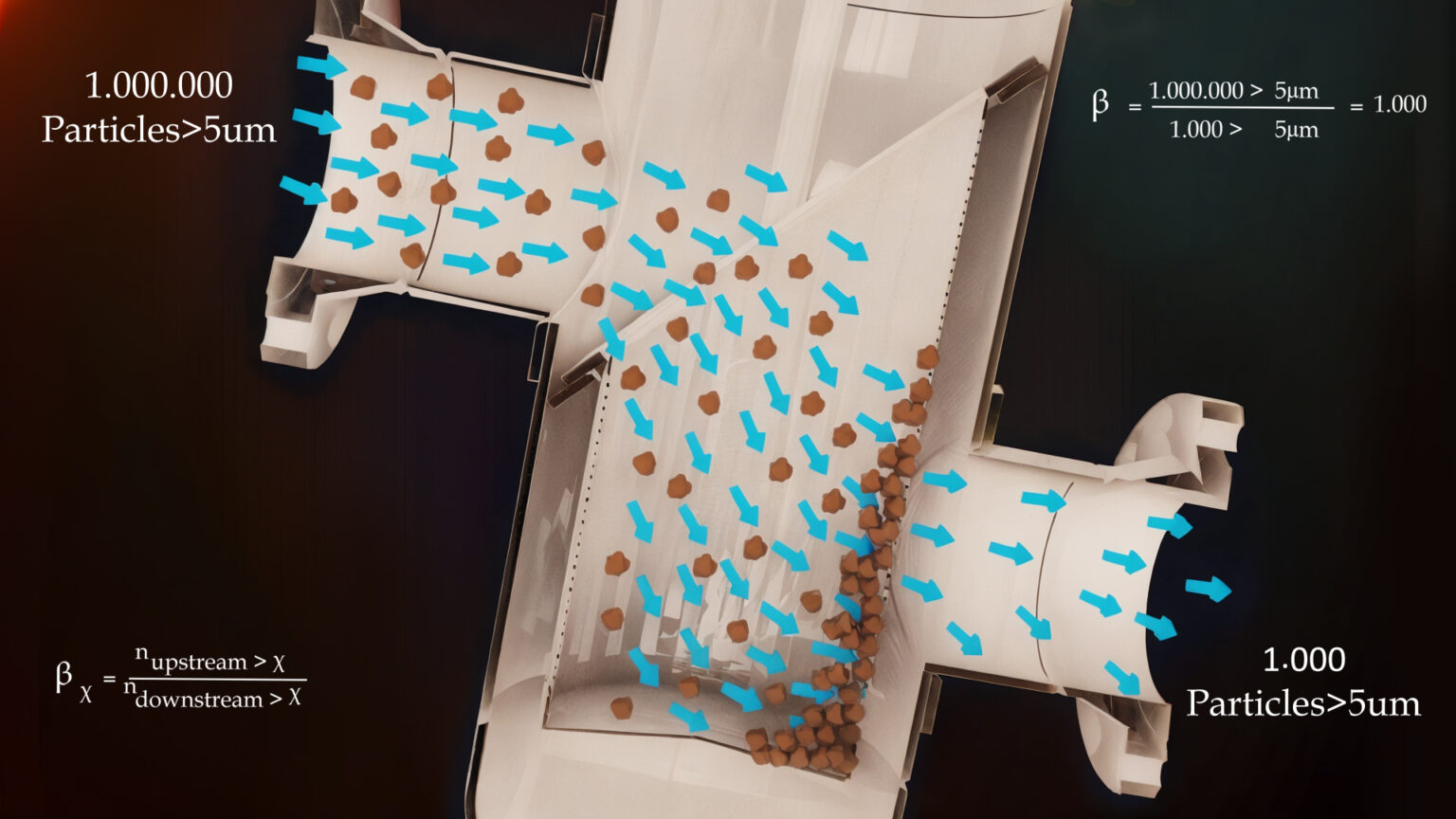
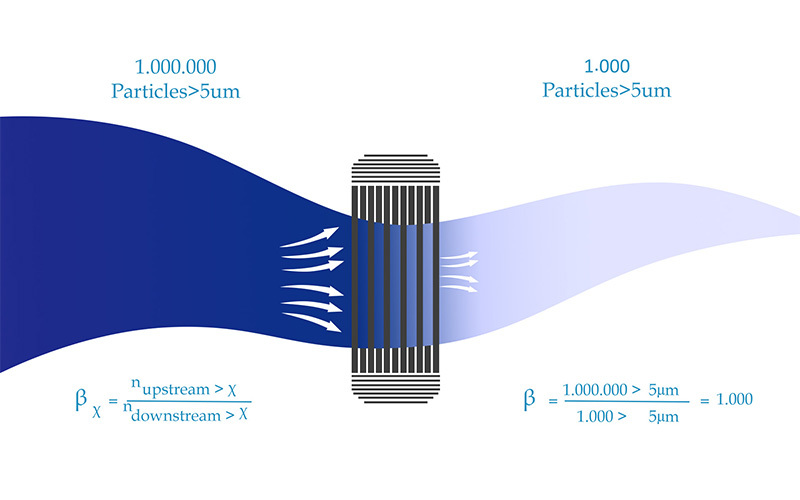
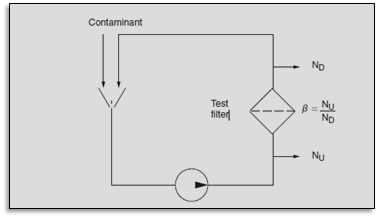
The beta ratio is defined as the ratio of the number of particles per unit volume, above a certain size (X), upstream of the filter to the number of particles downstream of the filter, this parameter is determined in the test device, which is capable of counting particles in two zones. It is from the current (before and after the filter). Particles in filtration systems are grouped by size, where the ratio β is clearly defined for each particle size or each group of particle sizes. (figure 1)
The beta ratio is defined according to the following formula:
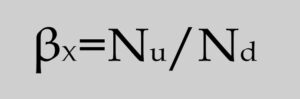
In this formula, the parameters are:
βX: Beta ratio at given size x
Nu: the number of particles larger than x µm in the upstream of the filter
Nd: number of particles larger than µm x in the downstream of the filter
What is the relationship between beta ratio and return?
The beta ratio is a measure of the actual separation efficiency of the filter element, where a higher value means that more particles of the specified size or larger will be retained by the filter. To calculate the filter efficiency, we can use the beta ratio or directly count the number of particles using the following formulas:
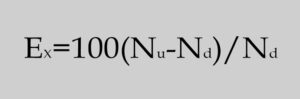
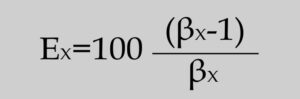
Ex: Efficiency value of the filter element.
The efficiency of a filter varies depending on the particle size that it is designed to capture. At the absolute cut point value, the number of particles counted should be zero, resulting in 100% efficiency. However, for particle sizes smaller than the absolute cutoff point, the efficiency of the filter will be less than 100%.
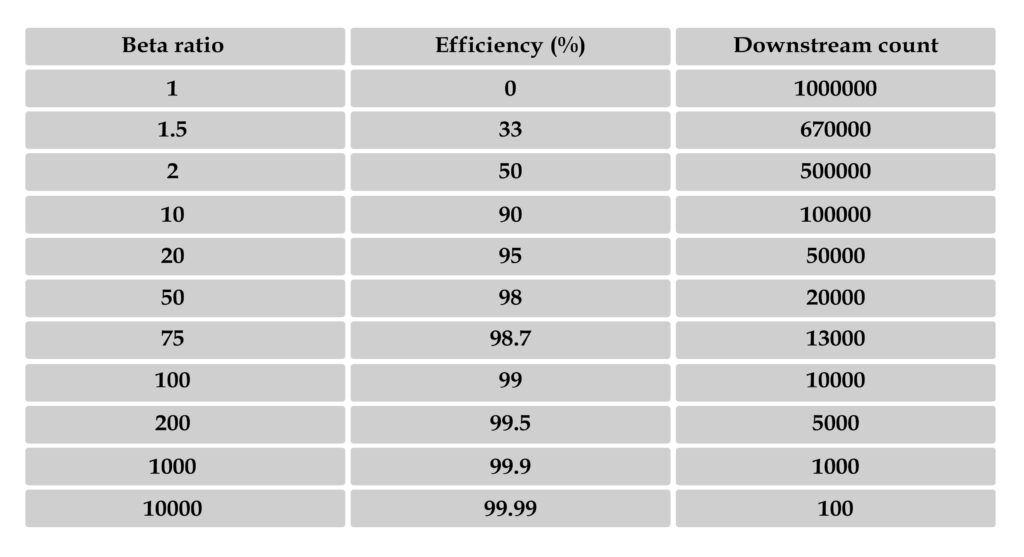
Table 1 displays the beta ratio and filter efficiency relationship, along with the amount of particles that flow downstream of the filter. For instance, a filter with 99.9% efficiency has a beta ratio of 1000, while a filter with 99.99% efficiency has a beta ratio of 10 times higher than that.
Determination of the beta ratio
The beta ratio is a measure that is calculated by using the multi-pass method standard (ISO 16889). This method involves continuously circulating a substance through the filter chamber being tested, with several specialized sampling points. Additional particles are continuously introduced into the circulating flow to maintain a consistent level of pollutants in the test filter. Any particles that get trapped in the filter and fluid that is removed from the system for sampling are compensated for by introducing additional suspension. Samples are taken simultaneously upstream and downstream of the filter at predetermined levels of pressure drop across the filter under test. These samples are then analyzed in an automated particle counter. The pollutant used in this test is typically a standard test dust, such as the Dust ISO Medium Test which is recommended for hydraulic and lubrication systems. From the counted samples, the cumulative particle size distribution is determined per unit volume of fluid in a wide range of sizes (such as 5, 10, 20, 30, and 4μm). The beta ratio can then be calculated for each of the selected particle sizes using the provided formulas.
When selecting a hydraulic filter, it’s important to make sure that the beta ratio is realistic for the expected filter life. This is because the beta ratio often decreases significantly with increasing pressure drop in many filter elements. To get a realistic beta ratio, a repeated pass test must be done to a final pressure drop that is higher than the operational setting of the dirty element warning device in the actual hydraulic system.
To compare the beta ratio against the pressure drop of the clean element to the final pressure drop, you need to look at the plot. The beta ratio may change as the particulate matter increases, and the filter may become more efficient. However, increasing the particle load also increases the back pressure. It’s therefore important to only consider the beta ratio for the new filter element.
Beta stability in filtration systems:
Beta stability is a way of measuring how well a filter can maintain its beta ratio when pressure drops beyond the normal operating range. It’s important to know how the beta ratio of a filter remains constant at higher pressure drops. A well-designed filtration system can help with maintaining beta stability. This can be achieved by ensuring that the filtration system is kept clean, and by choosing the right filter element. However, it’s important to note that these factors should only be considered after the results of multi-pass tests have been reviewed.
Beta analysis
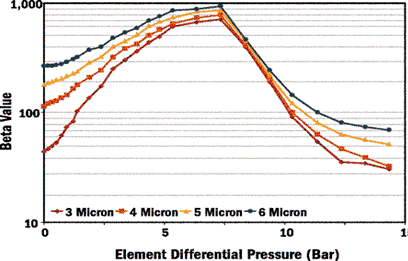
The graphs presented below display the beta values in relation to the pressure difference between the two filter elements at the end of each particle counting period during the test. Both sample curves of the filter element depicted in the graphs can be compared for an application that requires a servo valve sensitive to pollutants. Both filters have an average beta ratio of 300 for 3-micron particles. Based on the average beta ratio, it seems that the element filters have the same characteristics, and further comparisons of the beta ratio should not be made. However, as shown in Figure 1, the beta ratio is 700 at the beginning of the test and gradually decreases to 200 by the end of the test. This element provides excellent protection against pollutants at the beginning of the test, while it provides less protection at the end of the test. This element can be used in all applications where a minimum beta value of 200 is required for adequate protection of hydraulic equipment.
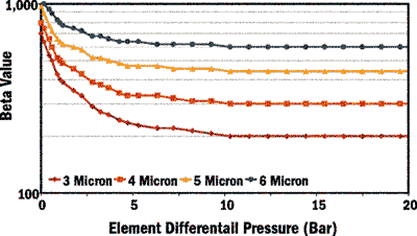
The second element initially has a beta ratio of β3 = 50 at the start of the test, but gradually increases to a maximum of 700. Although the average beta ratio is 300, it may not be sufficient to protect the contamination-sensitive servo valve during installation and early use of the hydraulic system. The valve may only be protected after contaminants have accumulated in the filter, and possibly after a system failure. At that point, the filter element will provide the necessary protection for the system.
Upon further examination of the beta curve for the filter element shown in Figure 1, it is observed that the beta value remains at 200 or higher over a pressure differential range of 20 bar. This indicates that the element has excellent beta stability and provides the necessary protection for the system in all pressure drops. On the other hand, the beta value for the second element decreases rapidly after the pressure drop of 8 bar. Therefore, this element cannot provide the necessary protection for the servo valves when the pressure drop exceeds 8 bar.
Advantages of beta parameter analysis in filtration systems
In summary
Filter manufacturers and filtration professionals use the beta ratio as a measure of filter quality. It is an industry standard that helps filter users to make informed choices when it comes to safeguarding their hydraulic systems. The beta ratio is only applicable to a specific particle size. For instance, if a filter element is designed for particles of 5 microns, then 5β will only apply to particles of that size.
To calculate the beta ratio, divide the number of upstream particles by the number of downstream particles. For example, if there are 100,000 particles with a size of 5 microns or larger before the filter, and only 100 particles of the same size after the filter, the beta ratio will be 1000.
When measuring the beta ratio, the efficiency of the filter element at a given particle size can also be determined. Efficiency is calculated by subtracting 1 from the beta ratio and then dividing by the beta ratio. Over time, a filter’s beta ratio may change as particles collect on the element; oftentimes, the filter becomes more efficient. However, increasing the particle load also leads to an increase in the pressure drop of the system.
Please note that the accuracy of the β values is dependent on various factors such as the number of particles in the fluid sample, fluid volume, counting method and accuracy, and sample processing technique.
It is important to consider the beta ratio or particle removal efficiency while selecting a filter. Even though filters with a low beta ratio or poor efficiency may be cheaper than those with a high beta ratio or good efficiency, they may lead to system failure in the long run and cost more.
Author: Forough Khalili
September 2023

 Save the post
 Projects: