

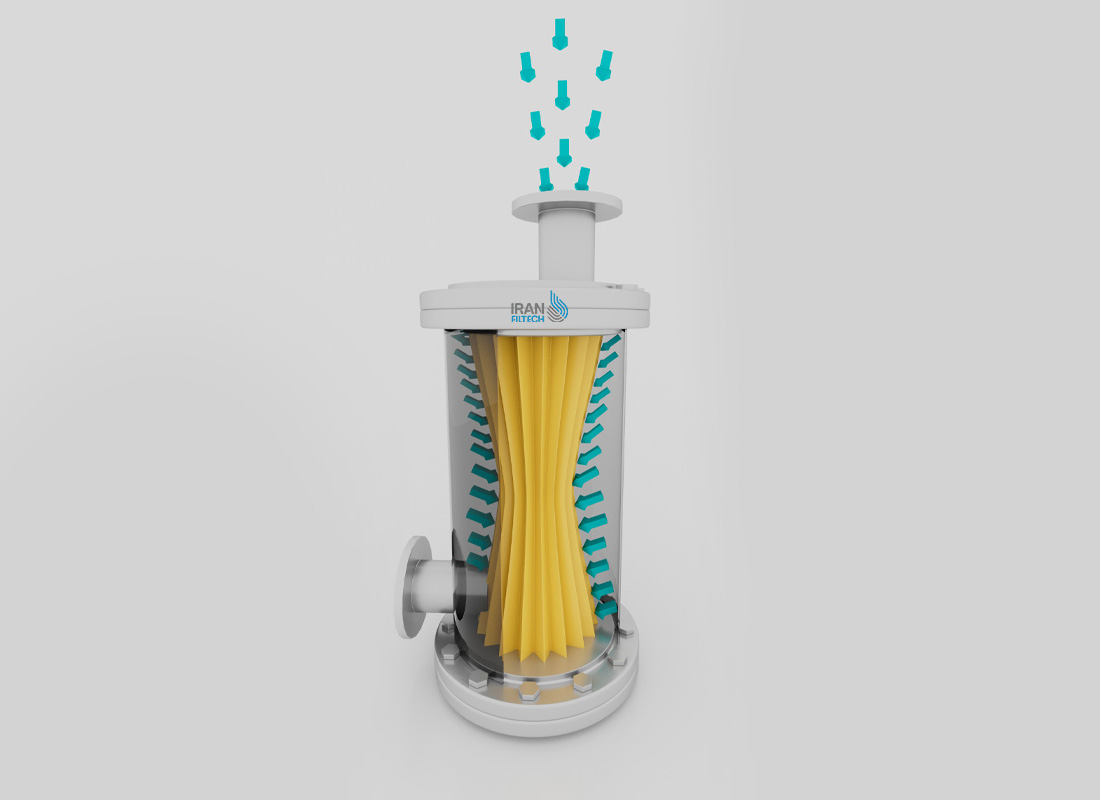
Filtration is a crucial process in many industries that helps to remove unwanted materials from a fluid stream. A filter element is an essential component of filtration systems that comprises three main parts: media, support, and filter body.
The media is the primary component of a filter element and typically consists of a porous surface. A designer determines the appropriate filtration area for a filter element by performing calculations for a specific volume of fluid that needs to be filtered. This area is directly proportional to the amount of flow passing through the filter.
The support holds the media in place and prevents it from being damaged or deformed. Typically made of metal or polymer materials, supports come in various shapes and sizes.
The filter body protects the internal components of the filter element and facilitates fluid flow. It is generally made of metal or polymer materials.
One of the most critical parameters affecting filter design is the amount of pressure required to force fluid through the filter membrane. This pressure varies for different fluids and systems. Therefore, media with a mesh or woven fiber structure or non-woven fibers must be able to withstand high flow pressure.
To prevent the media from being deformed or damaged, it must be placed in a strong structure. Media are often supported with metal supports that are located in the direction of fluid outflow. These supports must be sturdy enough to withstand the force generated by fluid pressure and prevent deformation or damage to the filter structure and media.
Filter element designers must use the appropriate material, shape, and thickness for these types of supports to be able to withstand the force. It is important to note that the filtration area or the area used from the media to convert pressure into force directly affects the calculation of the support.
The effective surface for generating force is the filtration area, considering that the time of force application to the support is when the media surface pores are blocked. In most cases, the designer only considers the effective surface of the support in their calculations, which is different from the main effective surface.
Conclusion:
When designing the support for the filter element, it is important to take into account the filtration area of the media as the effective surface for generating force. This will help ensure that the support you design is able to withstand the force generated by the fluid pressure, and prevent any deformation or damage to the media itself.
Author: Mojtaba Saadatpour
September 2023

 Save the post
 Projects: