


Purification of air entering gas turbines is crucial due to various reasons. An optimal filtration system is necessary for gas turbines due to reasons such as preventing erosion and prolonging the lifespan of the turbine.
The article discusses gas turbine filtration systems, including the types of filters used in multi-stage filtration design. The optimal filtration system for gas turbines depends on several factors, including weather and climatic conditions in the turbine’s installation location. Since gas turbines are used in various environments, ranging from hot, dry, and sandy areas to wet and snowy arctic climates, it is crucial to consider all regional conditions to increase turbine efficiency and prevent equipment damage. Climatic conditions can directly or indirectly affect gas turbine inlet air filters, which, in turn, can affect turbine performance and efficiency. Below are some of the weather conditions and climatic effects that can affect gas turbine inlet air filters:
Air pollution refers to the presence of suspended pollutant particles in the atmosphere. Areas with high levels of air pollution experience an increase for particles in the air. To prevent damage to the internal components of gas turbines, it is crucial that the inlet air filters can effectively filter these suspended particles.
Humidity: Placing gas turbines in areas with high humidity can reduce the lifespan of filters and decrease their efficiency in purifying the air. Certain filters may be vulnerable to water infiltration, and if they are not designed to remove water, moisture can absorb dissolved contaminants and carry them through the filter to the gas turbine inlet. In cases where harmful contaminants pass through the filter with the water, it can potentially damage the gas turbine. For instance, salt is soluble and can cause corrosion in the turbine.
Temperature: When selecting gas turbine filters, it is crucial to consider the temperature surrounding the turbine. Some filters may not work efficiently in excessively high or low temperatures. Therefore, it is essential to opt for filters that perform optimally under the temperature conditions of the turbine’s installation site.
Wind intensity: In areas with high wind intensity, suspended particles and air pollution can transfer to gas turbine air filters. Therefore, it is recommended to use filters that are easy to install and replace in harsh wind conditions.
Salt concentration: The presence of salt in the environment where gas turbines are located can cause various parts of the turbines to corrode and form deposits on the equipment. The most serious type of corrosion that occurs in the turbine section is known as hot corrosion, which is essentially a type of oxidation that happens between components and molten salts deposited on their surface. Sodium sulfate (Na2SO4) is usually the primary substance that causes hot corrosion and it becomes more severe as the surface temperature of the gas turbine increases. As the turbine temperature rises, sodium sulfate becomes liquid and attacks the turbine blade coatings, causing irreversible damage and leading to decreased performance, early failures, and costly repairs.
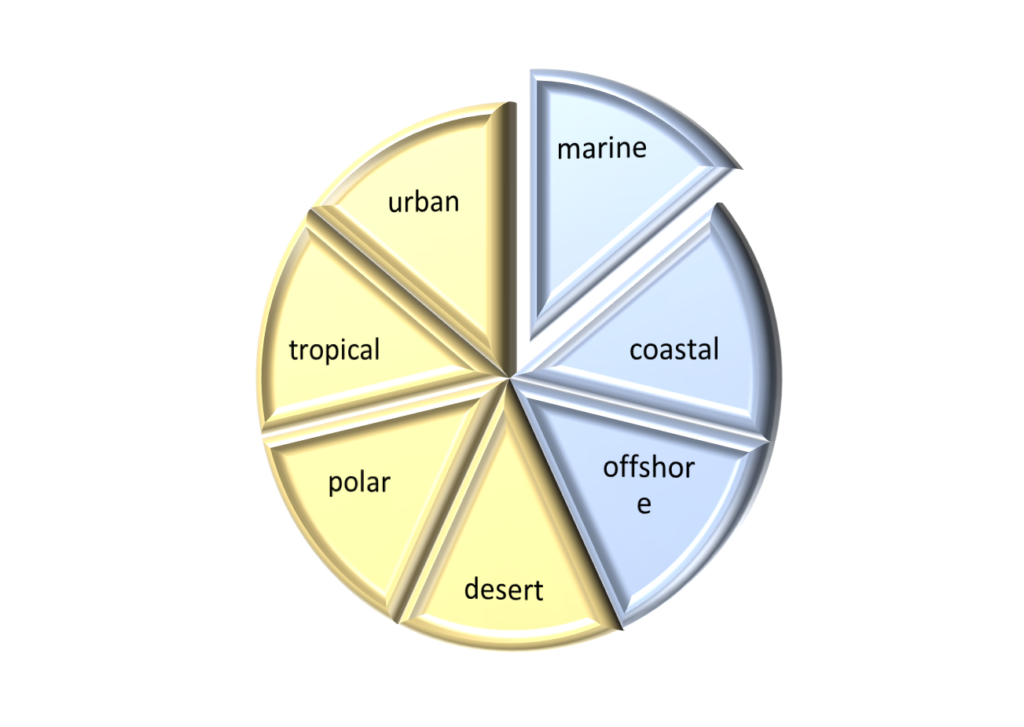
Types of working environments of gas turbines:
To assess the environmental conditions of gas turbines, the classification of environments where gas turbines may be installed is based on climate, weather conditions and the type of pollutants. Each environment has a unique set of weather conditions, humidity levels, and types of pollutants. Gas turbines are installed in two main categories of environments, wet areas (coastal, marine, and offshore) and dry areas (land-based), including desert, polar, tropical, urban, and rural areas that are industrial. Each of these categories is discussed below for better understanding.
The main difference between wet and dry regions lies in the concentration of salt in the atmosphere. Coastal, offshore and marine environments are known to have a strong presence of salt, but it can also exist in arid regions. Salt is a significant cause of corrosion in both the hot and cold sections of gas turbines. Additionally, the high concentration of salt in the atmosphere can cause sedimentation of the compressor blades.
Marine Regions
In marine environments, gas turbines are commonly installed on vessels for various purposes such as propulsion, torque generation, or compressor driving. The inlet of these turbines is typically placed around 100 feet above sea level. In such environments, salt and seawater are considered the most damaging pollutants, and therefore, the primary focus is to remove them through the inlet filtration system. However, the design of the filtration system can be challenging due to the space and weight limitations of ships, which often leads to compromised engine performance. Currently, the most popular filtration system used in marine vessels is the three-stage vane separator/ coalesce /vane separator system. This high-speed system is highly efficient in absorbing water particles and salt dissolved in water particles (salt aerosols). The first separator removes large amounts of water from waves, rain, or snow to prevent the overloading of the coalesce. The coalesce collects smaller water droplets not captured by the first vane separator and separates them into larger droplets that are either discharged or re-introduced into the air stream. Any larger droplets that are re-entered into the air stream can be captured by a second vane separator. The coalesce also acts as a particle filter capable of capturing larger dust particles and is useful for operating gas turbines near coastlines.
Coastal Regions
Gas turbines are commonly installed on marine vessels and are typically located about 100 feet above sea level. They are extensively utilized in marine environments, with some serving as propulsion engines for ships, while others generate torque or drive other equipment. When designing and selecting an inlet filtration system for a gas turbine, it is important to consider the anticipated salt concentration and the level of pollutants in the surrounding dry environment. To ensure that all pollutants are removed, a multi-stage inlet filtration system is typically utilized. To minimize the amount of water entering the intake air, most filtration systems begin with some type of weather protection, typically a weather hood. In locations with high rainfall, vane separators may be included as a first step to remove water that infiltrates the air hood. The coastal environment is distinct from the marine or offshore environment. As previously mentioned, when designing the filtration system, the amount of humidity and salinity near the sea should be taken into account. Coastal areas have filters that are designed to remove pollutants from the intake air. These filters include pre-filters and high-efficiency filters, which remove particles that can cause erosion or deposition. Although salt is a primary concern for gas turbine corrosion, other contaminants in coastal environments can also lead to gas turbine degradation? Coastal areas are subject to various weather conditions, ranging from dry and sunny to rainy, snowy, and freezing fog. In addition to salt, sand, industrial dust, and unburned hydrocarbons are common in many coastal environments. In tropical conditions, heavy rains, high humidity, and large amounts of insects can also be present in these areas.
Offshore Regions
Coastal areas are prone to pollution, and therefore have filtration systems in place to remove pollutants from the intake air. These systems usually include weather protection or vane separators, as well as pre-filters and high-efficiency filters. The purpose of these components is to remove particles that can cause erosion or deposition. While salt is a primary concern in gas turbine corrosion, other contaminants can also lead to the degradation of gas turbines in coastal environments? Coastal weather conditions can range from dry and sunny to rainy, snowy, and foggy. The presence of sand, industrial dust and unburned hydrocarbons makes it necessary to have effective filtration systems in place. In addition, tropical conditions such as heavy rains, high humidity, and insects can also be a concern in these areas.
Dry Regions
Gas turbines are often located in arid regions, which means they are exposed to a variety of different environments. These environments can range from cold, polar climates where snow and ice removal is the primary concern, to tropical climates where there is a significant amount of rain and insects that need to be filtered out. Each of these environments has unique pollutants and seasonal variations that need to be taken into consideration when operating and maintaining the gas turbines. The conditions of different environments are determined by various factors such as typical weather patterns and air quality. However, it is important to also take into account any short-term or seasonal changes that may occur. In this context, some examples of dry regions where gas turbines can operate are deserts, tropical regions, rural areas, large cities, and industrial areas.
Desert Regions
Desert regions are known for their dry weather, long sunny periods, strong winds, sandstorms, dust storms, and occasional intense rainfall. Dust levels in deserts can vary from mild during low wind conditions to relatively high during dust storms. Traditional filtration systems that do not self-clean can quickly become overloaded and require frequent filter replacements. This can lead to degraded system performance due to excessive pressure drop. To avoid these issues, a self-cleaning filtration system is necessary. Research has shown that filter systems without self-cleaning mechanisms are more expensive due to the associated maintenance costs of filter replacement. In gas turbine systems in desert regions, inertial separators are used as the first line of defense. While they are effective in removing large dust particles (greater than 10 microns), they have low efficiency in removing small particles.
Pulse cleaning systems have emerged as a more efficient way to filter solid particles, reducing the need for inertial separators. These systems use high-efficiency cartridge filters and are particularly effective during sandstorms. They maintain acceptable pressure drop levels through continuous cleaning, without any need for operator intervention, allowing the gas turbine to operate satisfactorily in adverse conditions. However, it is essential to exercise caution when using pulse systems. If the environment has high humidity, fog, or sticky particulate pollutants, such as pollen, particles may adhere to the cartridge filter elements and cannot be cleaned by air pulses. While some filters can tolerate some levels of humidity and sticky particles, eventually, they need to be replaced to restore their initial conditions with new clean filters. In conditions of high humidity due to fog, an additional stage with a coalesce and centrifugal separator should be considered. Although pulse-cleaning systems have higher initial costs compared to conventional filtration systems, the benefits of using them in dusty or desert environments outweigh the costs by reducing maintenance and labor expenses.
Rural Regions
Rural areas have varying climatic conditions, which can include warm, dry, rainy, snowy, and foggy weather throughout the year depending on the specific region where the gas turbine is located. Generally, these areas have a non-erosive environment with low concentrations of dust and dirt for most of the year. These areas can be located near forests or close to agricultural areas. Filtration systems in such regions typically consist of a three-stage air inlet hood, a pre-filter, and a high-efficiency filter, which help to keep the turbine functioning smoothly.
Air hoods are designed to protect filters from rain and snow at the lower end. A screen is used to repel insects and capture some of the dust entering the filtration system. Additionally, pre-filters are used to remove erosive dust from the air and protect high-efficiency filters from rapid overloading. High-efficiency filters are responsible for removing smaller particles. If a gas turbine is located near an agricultural area, it may require a self-cleaning system to combat the high concentration of erosive dust during plowing or harvesting seasons. Carbon steel is typically used for filter housings, ducts, and components, and to prevent corrosion, a paint coating is often applied. However, if the area is situated near dry salt flats or a source of corrosive pollutants, stainless steel may be a better choice.
Large Cities
Gas turbines located in large cities typically face various pollutants such as corrosion, erosion, and deposits, making it necessary to use multi-stage filtration systems. To adapt to changing weather conditions in different seasons and protect the system from rain, snow, and windy conditions, air hoods are commonly used. The filtration system consists of two stages: a pre-filter that removes larger erosive particles and a high-efficiency filter that removes finer particles. The high-efficiency filter is usually rectangular or cartridge-type. The filter housing is typically made of carbon steel with a protective coating. However, if there are high concentrations of corrosive gases, dust, or salt, stainless steel may be used. In areas where these pollutants are present, the gas turbine inlet is often equipped with a sound attenuator to control the emitted noise to the surroundings.
Industrial Areas
Industrial areas with heavy air pollution often have many gas turbines installed. These locations may fall under any of the aforementioned environments, but they have additional concerns as well. Pollution is a significant issue in industrial environments, with several sources contributing to the problem. All industrial sites share a common problem in that the filtration system’s inlet is exposed to local greenhouse gas emissions. This exposure requires a highly efficient filtration system to remove fine particles present in the air. One possible solution to reduce the amount of greenhouse gases entering the inlet is to direct the airflow away from these emission sources. However, even with this action, there are still some greenhouse gases that the turbine will ingest. To address this issue, additional filters must be incorporated into the filtration system. For example, if an industrial environment is located near a coal storage facility, the gas turbine must be equipped with pre-filters and high-efficiency filters to remove coal dust from the air.
Air in industrial locations often contains sticky aerosols, which are a type of pollutant. These tiny particles can come from sources such as oil vapors released by lubrication systems, or unburned hydrocarbons from exhaust stacks. Removing these suspended particles from the air is a difficult task and can often lead to blade fouling. To minimize the negative effects of aerosols on gas turbines, high-efficiency filters must be used. However, to maintain the cleanliness of compressor blades and prevent negative impacts on gas turbine performance due to deposition, a compressor-washing scheme is necessary.
Classification of pollutants
Pollutants present in turbine installation areas can be divided into two main groups based on their particle size. The first group comprises particles ranging from 2-5 microns, which are primarily natural particles originating from minerals. The second group comprises particles less than 2 microns, which are generally associated with air pollution from industrial processes and internal combustion engines. This group usually includes a high percentage of unburned hydrocarbons and oil mists. Most environments will have a combination of both groups, and it is essential to evaluate both groups carefully for each area.
To help summarize the information provided above, Table 1 has been created that lists all the possible pollutants that may be present in different environments, along with their type and particle size. In addition, the table also provides the suggested filtration system for each type of pollutant. However, it is important to note that the numbers shown in the table are only approximate. For each specific location where the turbines are installed, measurements that are more detailed and checks should be carried out.
Designing filtration systems based on climatic conditions
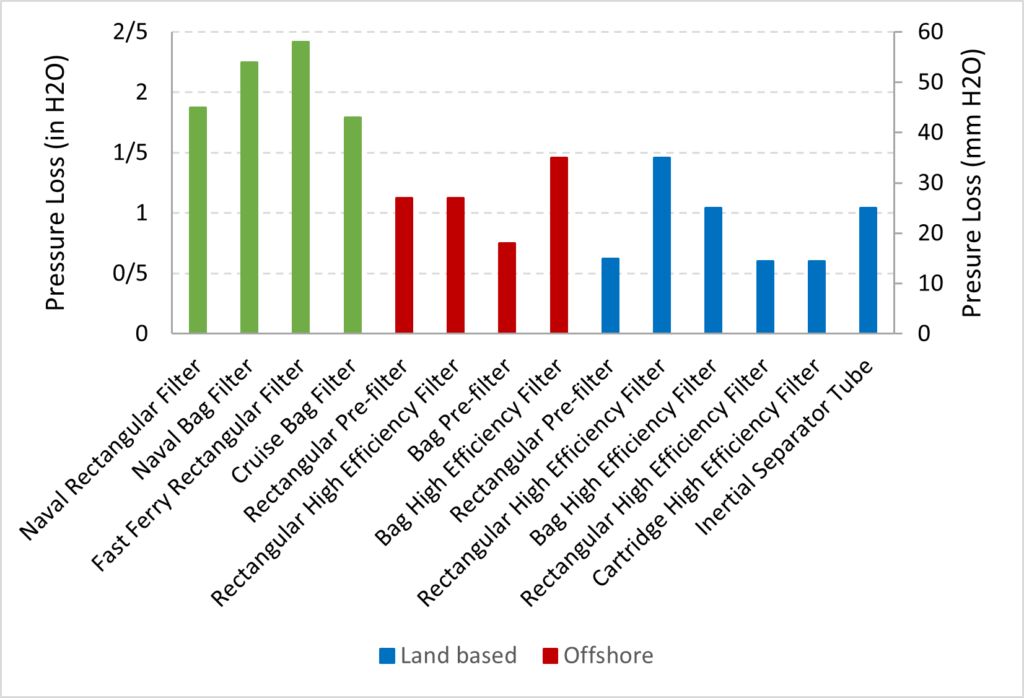
To ensure the proper functioning of a filtration system for a gas turbine, it is important to first determine the criteria for inlet air quality as specified by the manufacturer. During the design process, it is also important to consider various maintenance strategies such as filter replacement, offline or online washing, intervals between major repairs, and uninterrupted operating hours. Considering these factors will help ensure optimal performance and minimize downtime. The selection of the right filter is crucial for the efficient and safe operation of gas turbines. The pollutants present in the surroundings can enter the turbine’s inlet air and harm its performance, making it important to choose a filtration system that suits the environment. However, it is not always easy to evaluate the environment in which a gas turbine operates since it goes through changes with seasonal variations, weather patterns, or new constructions in the area. If the filtration system is not suitable for the environment, it can lead to frequent filter replacements, unplanned shutdowns, high inlet pressure drop, turbine damage, and associated costs or loss of productivity. It is also important to consider the pressure drop that filters can induce in the system, as selecting inappropriate filters can affect the system’s performance in terms of pressure drop. Figure 2 presents a comparison of the pressure drops in different filters for three different environments – marine, coastal, and arid.
The effect of wind on filtration
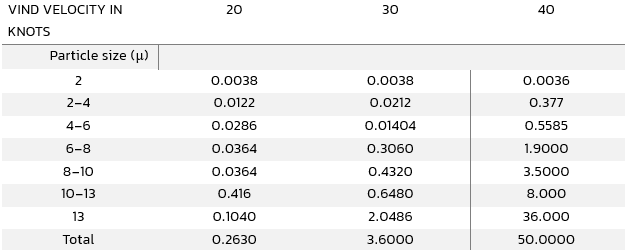
Design of filtration systems can be influenced by wind speed. Table 2 shows particle count at different wind speeds.
The effect of air velocity
Filtration efficiency is affected by various parameters, and one of the important ones is the velocity of the incoming air. The following table illustrates the relationship between filtration efficiency and particle size for a three-stage filtration system. As per the table, it is evident that higher airflow speeds result in a better filtration efficiency for smaller particles.

How to evaluate the gas turbine installation location:
As mentioned earlier, gas turbines can operate in different environments, and the air in different areas may contain various types of pollutants that are local, seasonal, or temporary. Therefore, each gas turbine installation site has a unique combination of pollutants, and when selecting an inlet filtration system, it is essential to identify this composition. This involves determining the types of pollutants present at the turbine installation site, as well as their concentrations and particle sizes. After determining the necessary information, the appropriate types of filters and filtration efficiency can be decided. To simplify the evaluation process, an assessment checklist is provided. The assessment starts with identifying the environment type of the installation site. Based on that, a list of potential pollutants can be created. In the following step, the surrounding areas need to be evaluated for any local pollutants. This can be achieved by visually examining each emission source in the area, including dirt roads, local agricultural areas, nearby industrial plants, and vegetation covers. These assessments require periodic sampling at the gas turbine installation site, and the samples collected should be analyzed to determine the type and quantity of pollutants present.
Airborne particles are generally divided into three groups, as illustrated in the figure. Evaluating the amount of these particles, particularly PM10, in different regions can be beneficial in developing filtration systems and predicting filter life expectancy.
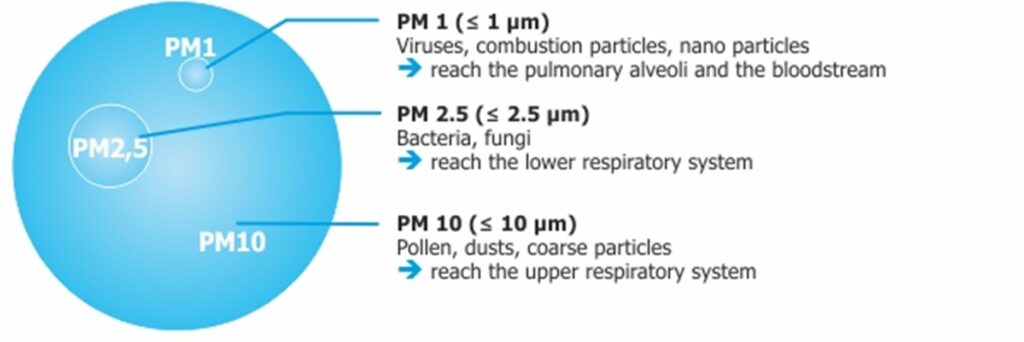
It is worth noting that the surrounding environment affects the filters used in turbines, and the local pollutants in the area can vary depending on the season. To ensure proper functioning, the installation site should be checked multiple times throughout the year. Meteorological data can help determine the type of weather the site experiences, which can help decide if freeze protection is necessary, or how effective the water removal system should be.
Conclusion
As previously mentioned, the filtration of the air that enters gas turbines is of utmost importance. When selecting filtration systems for turbines, various parameters need to be taken into account. One critical factor to consider is the climatic and weather conditions of the region where the turbines operate. Choosing the best filtration system by paying attention to these factors can greatly help in maintaining optimal performance and increasing the useful life of gas turbines and other auxiliary equipment. Additionally, it can significantly contribute to cost reduction.
References
Author: Forough Khalili
September 2023

 Save the post
 Projects: