

The sixth National Filtration Conference, with a focus on “Filtration in the Petrochemical Industries,” was held on April 22–23, 2025, at Isfahan Science and Technology Town.
The second day of the sixth National Filtration Conference began with a speech by Mohammad Ebrahimian, the Executive Secretary of the Conference. In his address, he evaluated the performance of previous conferences and outlined the future goals of this scientific event. Ebrahimian emphasized the role of this conference in enhancing specialized knowledge, creating synergy between industry and academia, and paving the way for the localization of filtration technologies in the country.
Following this, Hamidreza Tavangar, Head of Technical Inspection at Iran Gas Transmission Company – Region 2, introduced the strategic position of this region within the infrastructure of Iran’s gas transmission system. By presenting statistics on the length of pipelines, number of facilities, and workforce, he highlighted the prominent status of Region 2 in the country and its technical achievements, including the domestic manufacturing of industrial filters, redesign of scrubber filters, and installation of the first national turbine. Tavangar, pointing to technical challenges in the field of filtration, emphasized the role of specialized laboratories in improving quality, developing national standards, and reducing dependence on foreign products, considering these actions as strategic steps toward strengthening the country’s energy security.
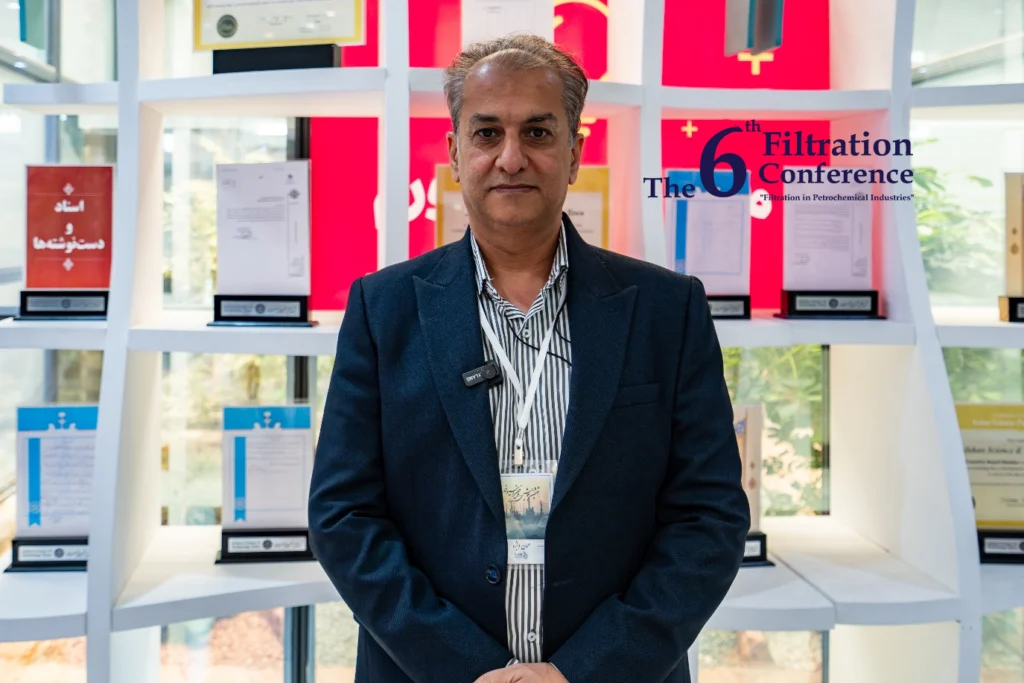
Meysam Rasooli, technical inspection expert at Isfahan Province Gas Company, reviewed the effectiveness of the IGS M-PM 111(2) standard in optimizing the natural gas filtration process. Emphasizing the critical importance of filtration in gas compressor stations, he warned that contamination of the gas entering compressors can lead to corrosion, erosion, fouling, and even equipment failure. Rasouli, by introducing various filtration equipment including scrubbers, separators, and dry gas filters, highlighted the key role of these components in ensuring the safety and stability of the country’s gas transmission system. He stated that proper implementation of this standard significantly contributes to improved design, material selection, production quality control, and reduced cartridge variety.

Continuing the conference, Amir Motahari, Technical Director of a knowledge-based company, delivered a speech titled “Enhancing Efficiency and Reliability through Varnish Removal from Turbomachinery,” analyzing one of the emerging challenges in the petrochemical industry. He pointed to the causes of varnish formation—including thermal degradation of oil, electrostatic discharge, and incompatibility of lubricant formulations—and highlighted its consequences, such as temperature rise, filter clogging, and shutdown of critical equipment. Introducing technologies like offline nano filters (Delta-Xero), Motahari emphasized the necessity of adopting preventive approaches in lubricant design and monitoring, and considered the integration of technical, supervisory, and analytical measures as key to maintaining the health of lubrication systems in advanced industries.

Dr. Mojtaba Khani, Senior Researcher and Head of the Water Treatment and Recycling Group at the Research Institute of Petroleum Industry, delivered a technical analysis on membrane fouling and the resulting damage to reverse osmosis (RO) membranes. He introduced membrane autopsy as a precise scientific tool for identifying types of fouling, evaluating performance, and optimizing maintenance processes. He emphasized the importance of microbiological, chemical, and structural analyses in the proper management of membrane systems. Dr. Khani also identified techniques such as SEM-EDX, ATR-FTIR, and NGS as key tools in this process, and by presenting data from industrial pilots, introduced the use of anti-fouling solutions as an effective method to enhance membrane performance.
In another part of the conference, two more specialized papers were presented. Vahid Bazrafshan, in his paper, examined the effect of nanofibers on improving filtration performance in hydraulic systems and analyzed the role of this modern technology in increasing efficiency and reducing pressure drop in systems.
Similarly, Samaneh Baharloui, in a presentation titled “Improving Filtration System Performance in Oil and Gas Production Based on Closure-Based Data,” discussed the role of data-driven methods and advanced analytics in optimizing filtration processes in upstream industries.
Later on the second day of the 6th National Filtration Conference, two expert panels were held focusing on key practical topics in the filtration industry.
In the first panel, representatives from Poroshat Filter presented the design of a new generation of advanced all-metal filters and outlined their technical features, advantages, and applications in high-sensitivity industries.
The second panel, attended by a representative of Iran Filtech, focused on the processes and methods of domestic filter localization in Iran and shared successful experiences related to supporting domestic production, reducing dependency, and improving national technological capability in this field.
In the closing segment of the day, four top conference papers were recognized and commemorative plaques were awarded to the authors by the scientific committee in appreciation of their outstanding scholarly contributions. The ceremony, emphasizing the role of applied research in advancing technical knowledge and developing the country’s filtration industry, concluded the second day’s program of the conference.

At the 6th National Filtration Conference, in addition to scientific programs and expert sessions, a side exhibition was held with the participation of companies such as Sanat Yaran, Poroshat, Ati Andishan Basir, Arvin Sanat, SamTech Ceram, Isfahan Wire Industries, and Paya Mavad. These companies showcased their latest products and capabilities in the field of filtration, providing an opportunity for industry stakeholders to connect and explore collaboration opportunities.
Closing Statement of the Conference
With pride, we stand at the end of this vibrant journey, aiming to be a bridge toward a brighter future for the beloved industry of our country, Iran.
The National Filtration Conference is not only a scientific and technical event but also a driving force in the industrial and environmental development of the country.
Today, as we gather together, our nation’s industry is more than ever in need of rethinking energy consumption, enhancing efficiency, controlling pollutants, and adopting modern technologies in separation and filtration processes.
For this reason, this event is held with the purpose of synergy and convergence of science and industry, and to create a shared platform for dialogue, solution-sharing, and constructive interaction among key players in this field.
Today, in the 6th edition of this conference, we are honored to host you with a serious focus on the challenges of energy imbalance, consumption optimization, and pollution reduction, so that together, we may work towards establishing a sustainable foundation for national synergy in filtration and clean technologies.

 Save the post
 Projects: